average age of deceased & number of deaths in 1842

In the year of 1839, 79 people from the upper class died, with an average deceased age of 44 years old. Number of deaths of those bourgeois, in contrast, was 824, ten times of the upper class, and the average deceased age was only 27. The working class, possessed a strikingly death number of 3,395, over 40 times of the gentry; however, the average age of deceased was only 19, equivalent to the age of a university freshman. Right now, things are much progress, with one in three people in Leeds are 50 years old or over. The average expectant age reaches 80 years old.
backdeath rate in Leeds from 1865-1905

When it comes to the death rate, this line graph shows the crude death rates in Leeds from 1865-1905, with an average death rate of 23.075‰. At the same time, it shows a decreasing trend, indicating an improvement in quality of life. Until 2021, the death rate in Leeds has dropped to 9.2‰.
backnumber of water closets
From 1850s, a growth in the number of flushing water closets can be observed, suggesting increasing number of people got access to more facilities instead of the privies which may potentially cause hygiene problems.
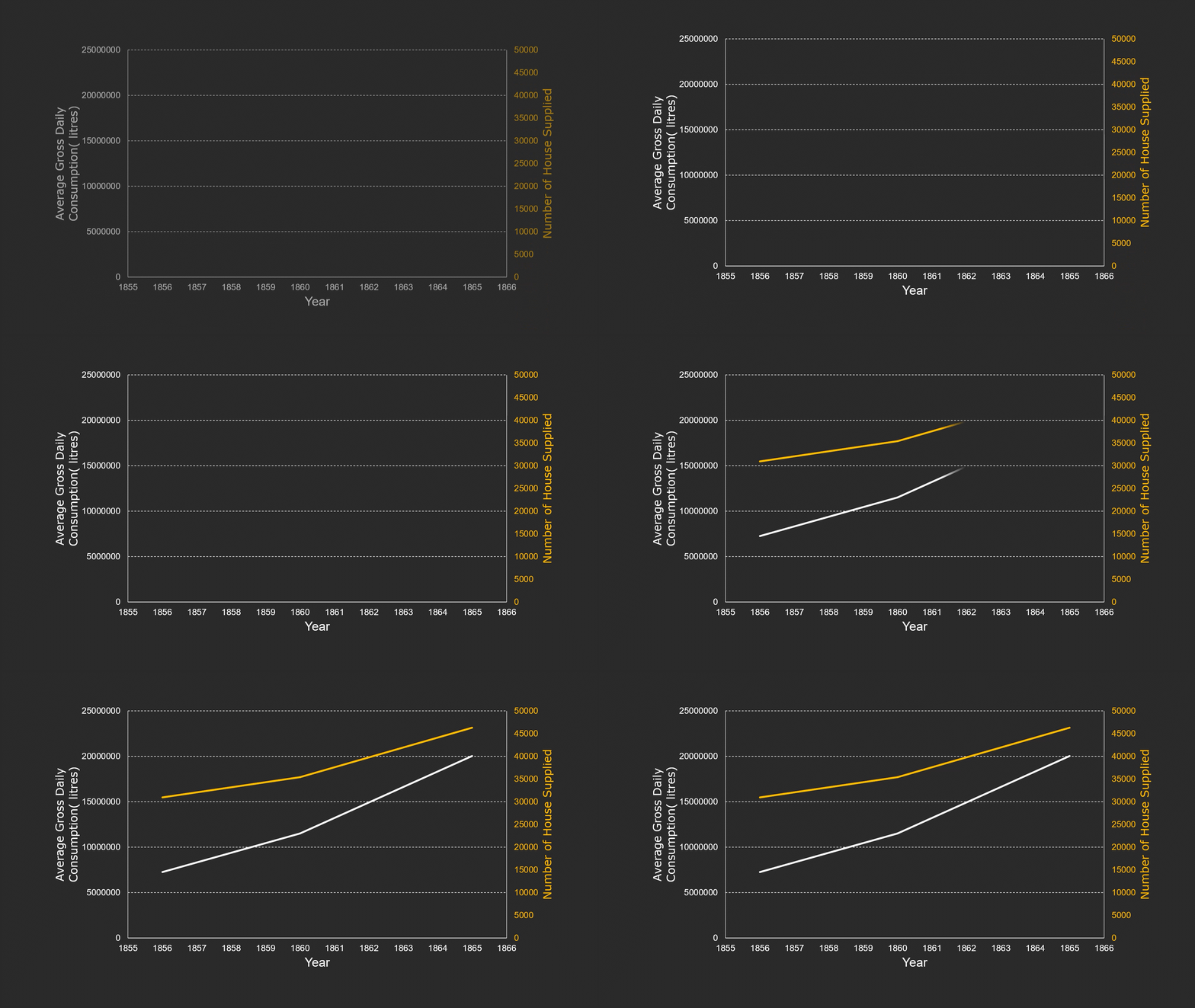
backaverage gross daily consumption & number of houses supplied with pipe water


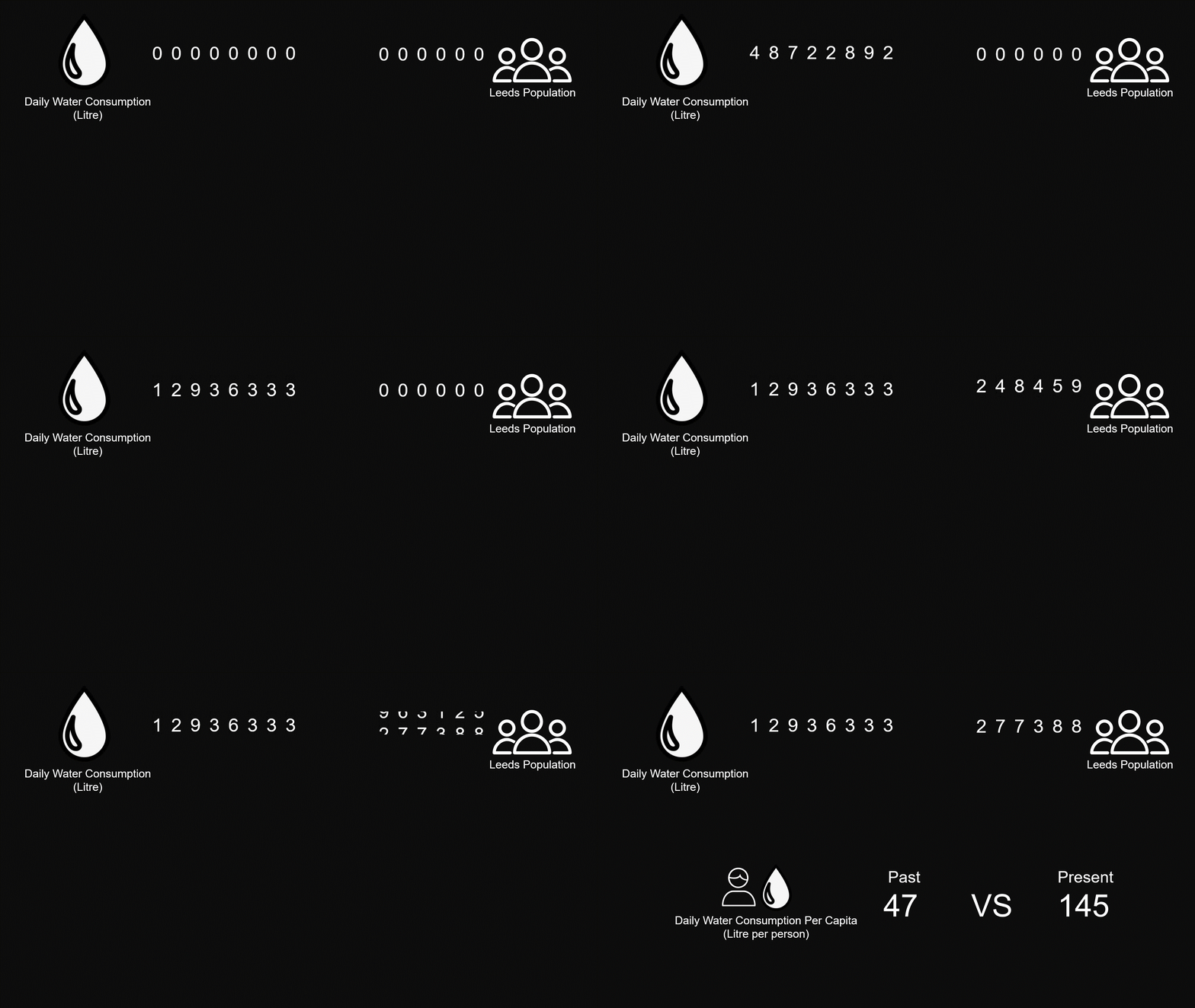
The sewerage system has also been progressing. Since the pipes were installed, an increase in daily water consumption can be seen, from an average of 7,255,000 litres in 30,996 houses in 1856 to 20,034,000 litres in 46,305 houses in 1865. Let’s do the math. The average daily water consumption of these years is 12,936,333 litres, and the average Leeds population in 1850s and 60s was approximately 277,388. So we can draw a conclusion that the daily water consumption per head is 47 litres per capita during that time. While at present, a person in the UK uses approximately 145 litres per day. That’s a huge progress!
backHousing Density of Some Courts in 1900


Here’s the housing density of several courts and yards, with 43.19 square metres per capita at maximum and 11.75 square metres per capita at minimum. It means that averagely, a person possessed a living area of 22.78 square metres at that time. In contrast, the average space per resident has risen to 36.5 square metres per capita in 2018.
back